
The questioning of American Lashker-e-Taiba terrorist David Headley is going to revolve around the places he had visited after the Mumbai terror attacks and the people he had remained in touch with during his stay in India. A three-member team of National Investigation Agency, which along with a public prosecutor is expected to leave for the United States on Monday.
The issue of granting India access to Lashkar-e Tayiba operative David Headley is being taken up by the US government at the highest level, its Ambassador Timothy J Roemer said Monday as he met Home Minister P Chidambaram in New Delhi.
On the fourth anniversary of 26/11 Mumbai terror strike, US Under Secretary for Political Affairs Wendy Sherman says Lashkar-e-Tayiba operative David Coleman Headley's extradition to India is under consideration in an exclusive interview with CNN-IBN

Overriding the Biden administration's appeal, a US court has ordered a stay on the extradition of Pakistani-origin Canadian businessman Tahawwur Rana, to India where he is facing a trial for his involvement in the 2008 Mumbai terror attacks.
American terror suspect David Headley arrested by the FBI for allegedly plotting terror attacks in India used to visit a golf course in Mumbai frequented by western diplomats and businessmen and is believed to have struck a rapport with them.
A Chicago court has given a 60-day deadline to the Federal Bureau of Investigation to complete its investigations and file an indictment into the foiled terror plot in India and Denmark by Pakistan-based Lashkar-e-Tayiba terrorist group.
The Mumbai police on Monday submitted a chargesheet before a special court in Mumbai against Pakistani-origin Canadian businessman Tahawwur Rana for his involvement in the November 2008 terror attacks in the metropolis.
There appears to be a pattern in the manner that the accused in the 26/11 Mumbai terror attacks case are making statements before the court.
Making it clear that no clean chit has been given to anyone so far in the Headley-Rana terror case, the government on Sunday said the probe to complete the duo's trail in India will take four to six weeks.

David Coleman Headley, the Pakistani-American Lashkar-e-Tayiba operative is being deposed before a Mumbai court on Monday through video conference.

India's National Investigation Agency is probing into his role in the 26/11 attacks carried out by Pakistan-based Lashkar-e-Taiba terrorists in 2008.

Rana, 59, a childhood friend of David Coleman Headley, was recently released from jail on compassionate ground after he told a US court that he has tested positive for the COVID-19.

The 59-year-old Rana, a childhood friend of David Coleman Headley, was re-arrested on June 10 in Los Angeles on an extradition request by India for his involvement in the 2008 Mumbai terror attack in which 166 people, including six Americans, were killed.

'They are both very individualistic and have similar personalities.'

Former Home Minister P Chidambaram said the government of India would not file formal charges against Pakistani-American terrorist David Headley until Ajmal Kasab's trial was over. Vicky Nanjappa reports
Magistrate judge Jacqueline Chooljian on Thursday ordered the defence attorneys and prosecutors to file additional documents by July 15, which was reported by a US news agency.
Home Minister P Chidambaram has said that the FBI's probe into a terror plot targeting India has confirmed a definite Pakistan link. Speaking to reporters after attending a passing-out parade of 61st batch of Indian Police Officers at the National Police Academy in Hyderabad on Thursday, Chidambaram said that on the advice of FBI, two or more persons have been arrested in Pakistan in connection with the same terror plot, uncovered by FBI.

US attorney urged the Los Angeles court that Rana be not released.
As it seeks the extradition of Pakistani-American terrorist David Headley from the United States, India has stressed on the need for the two sides to commit to the goal of assisting each other in the pursuit of justice.
The United States on Tuesday said that it was working closely with India on the Headley-Rana case to detect and prevent future terror attacks. Lashkar-e-Tayiba operatives David Headley and Tahawwur Hussain Rana were arrested by the Federal Bureau of Investigation from Chicago in October for plotting terror attacks in India and Denmark.
"David Headley has only allayed our worst fears and whatever is being said at Chicago only confirms our suspicion," commented an official who is accompanying Prime Minister Dr Manmohan Singh to Addis Ababa.
Ever since Headley was arrested in US, there has been a lot of talk regarding the Karachi Project, considered to be one of the most ambitious projects staged by the ISI where it plans to combine Pakistani forces and home-grown terrorists to launch a spate of terror attacks on India, reports Vicky Nanjappa.
With just days to go before United States President Barack Obama arrives in India, a major controversy has erupted over American terror suspect David Coleman Headley, who had allegedly surveyed locations in Mumbai that were targeted by the 10 Lashkar-e-Tayiba terrorists on November 26, 2008.
Describing Rana as a flight risk, the US government opposed his release on bail, arguing that if he were to flee to Canada, he may escape the possibility of a death sentence in India.

"Had corona (COVID-19) not been there, the prime minister would have dedicated NATGRID to the country. I am hopeful that the prime minister will dedicate NATGRID to the country in some time," Union home minister Amit Shah said during the 51st Foundation Day event of the Bureau of Police Research and Development (BPRD) here on September 4.

Security has been heightened at the Israeli embassy, consulates and other Jewish establishments in several states following intelligence inputs that terror groups like Lashker-e-Tayiba may target them.

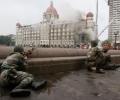
Ten terrorists of Pakistan-based Lashkar-e-Taiba carried out 12 coordinated shooting and bombing attacks lasting four days across Mumbai. At least 166 people, including six Americans and nine terrorists, were killed and over 300 others were injured in the attacks which began on November 26, 2008.
Sheela Bhatt reveals the inside story on the Federal Bureau of Investigation's revelations to India on the Headley-Rana case, and of how the findings have changed the 26/11 investigation in India.
Pakistan-based terror group Lashkar-e-Tayiba was planning to use an American national to carry out a major terrorist attack in India, US investigating authorities said on Tuesday.

He noted that the agency has already submitted a chargesheet in the alleged fake encounter case of Ishrat Jahan.
Key plotters of the 26/11 have once again escaped arrest upon the advice of Pakistan's intelligence agency, Inter-Service Intelligence officers.
The United States administration's approach to India -- including its 'slow' response to the request for questioning terror suspect David Headley and its proximity to Pakistan in the war on terror -- are steadily driving a wedge in the strong relations cultivated during the regime of former President George W Bush, noted historian Arthur Herman has observed.

Saroj Kumar Rath, author of the newly-published book Fragile Frontiers: The Secret History of Mumbai Terror Attacks, speaks to Rediff.com's Vicky Nanjappa.
Now that David Headley has pleaded guilty, it is settled that he will not be extradited to India and that India will not be allowed to interrogate him.
The verdict on Tahawwur Hussain Rana is expected by Wednesday. While India is eagerly awaiting the Chicago court's decision, investigators have chalked out a plan to ensure that a strong case is prepared against Pakistan and its Inter-Services agency in the 26/11 case. India may also push for Rana's extradition. Vicky Nanjappa reports
Three years have passed since India witnessed one of its worst terror attacks. While the National Investigating Agency tries stack up evidence against David Headley and Tahawwur Rana, security agencies across the country find themselves being foxed by a new wave of terror: unroganised hell.

'Pakistan may have moved back from this devilish plot in 2007, but there is no guarantee it won't be on the drawing boards again,' warns Rajeev Sharma.
India is all set to ask the United States and Pakistan to extradite nine persons involved in the 26/11 Mumbai terror attack that include Pakistani- American terrorist David Headley, Lashkar-e-Tayiba founder Hafiz Saeed and two Inter-Services Intelligence officers.
India has approached the United States seeking access to Tahawwur Hussain Rana, the Pakistani Canadian accused in the Mumbai terror attack case, and a reply in this regard is expected next month.
Insisting that it had shared with India terror-related inputs it deemed were 'potentially credible' to its national security, the United States on Saturday said it was looking into media reports that Federal Bureau of Investigation had prior knowledge of David Coleman Headley's links with terror groups in Pakistan.
